You keep hearing that you should spend 30 minutes a day on SEO. You have products to manage, orders to fulfil, and customers to help, so you want to know what Shopify SEO actually requires.
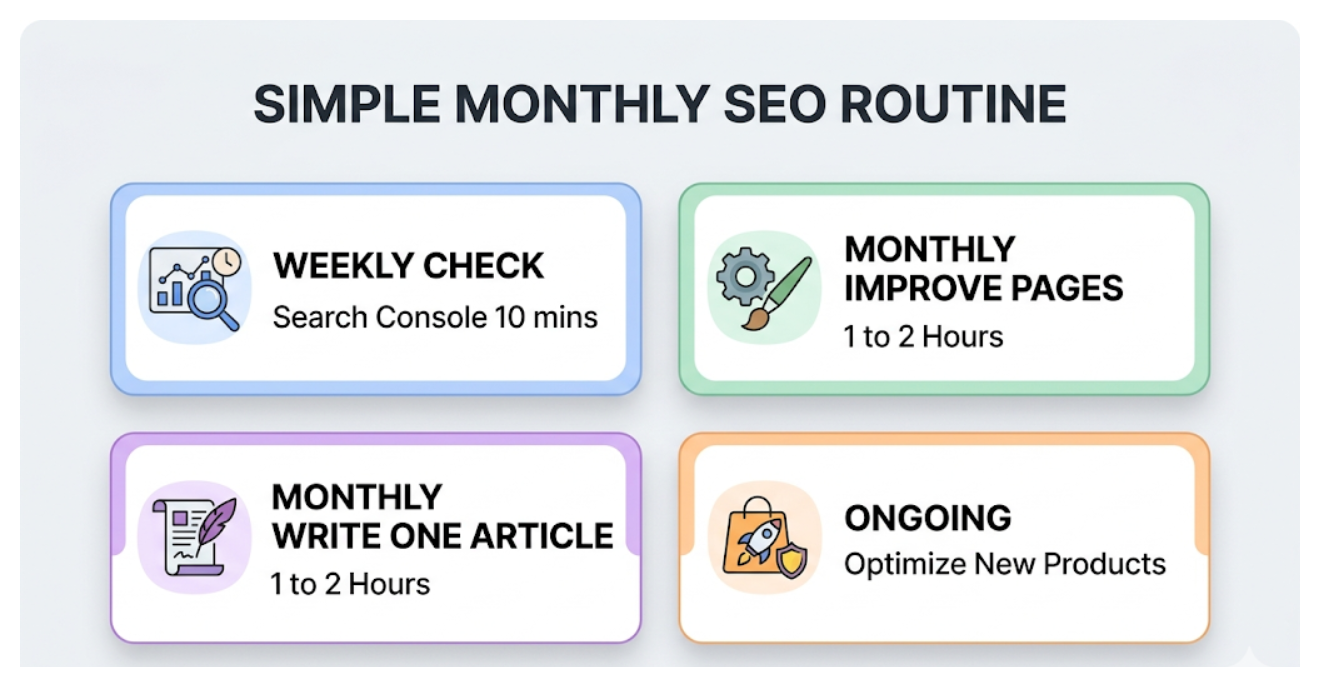
For a small store, SEO does not need daily attention. Spend focused time setting up the important pages, then give SEO one or two hours each week to review Search Console and improve one page. Add more time when publishing content is your main way to attract customers.
Spend the most time when you set up the basics
The first stage takes longer because the work affects the whole store. Check that Google can find your store, improve the product and collection pages that matter most, and connect related pages with internal links.
Start with five to ten important product or collection pages. Give each page a clear title, useful description, and search result title and description. Add the details customers need before buying instead of copying the supplier's text.
If you are starting from the beginning, see the first Shopify SEO tasks to complete for organic traffic.
Use one focused SEO session each week
Open Google Search Console → Performance → Search results once a week. Look at the queries and pages that received impressions, then choose one page to improve.
Give priority to pages that appear in Google but receive few clicks. Compare the search with the page title, heading, and opening text. Make the page clearer when it does answer the search, or choose a different page when the search needs a collection or article instead.
Use the rest of the session to add SEO details to new products, fix a broken internal link, or improve one collection. One completed page is more useful than several unfinished edits.
Add content at a pace you can keep
Publish an article when you have a customer question that your store can answer. One useful article every few weeks is enough for a small store that is still building its product and collection pages.
If your main pages are already strong and you want more organic traffic, publish more often. Keep the topic specific, link the article to the relevant collection or products, and update it when the information changes.
Tasks that do not need daily attention
You do not need to check rankings every day. Search positions move from one day to the next, and a daily change does not tell you whether a page is improving.
You also do not need to edit every product each week or publish a blog post just to keep a schedule. Use Search Console to choose the page that has the clearest opportunity.
When will you see results?
Check for indexing and impressions after Google has had time to revisit the page. A title change or broken-link fix can show up sooner, while new content and a new store usually need longer before the traffic pattern becomes clear.
Give SEO three to six months to show meaningful progress. Competitive searches take longer. Use that time to improve pages and review the data instead of judging the work from one week's traffic.
If your pages are indexed and you have improved the pages already receiving impressions but traffic remains low, find the reasons Shopify SEO can stay stuck at low traffic.
Start with one page that already receives impressions. It gives you the clearest next task.